








How Justin Sun Went From $45M Backer to Defamation Defendant
Justin Sun wrote a $45 million check to back World Liberty Financial, a crypto venture tied to the Trump family, and for a while that made him one of its most important supporters.
Justin Sun dropped $45 million into World Liberty Financial, instantly becoming one of its biggest and most powerful backers.
Sun is the founder of TRON, a major cryptocurrency project, so this was not small money from a stranger.
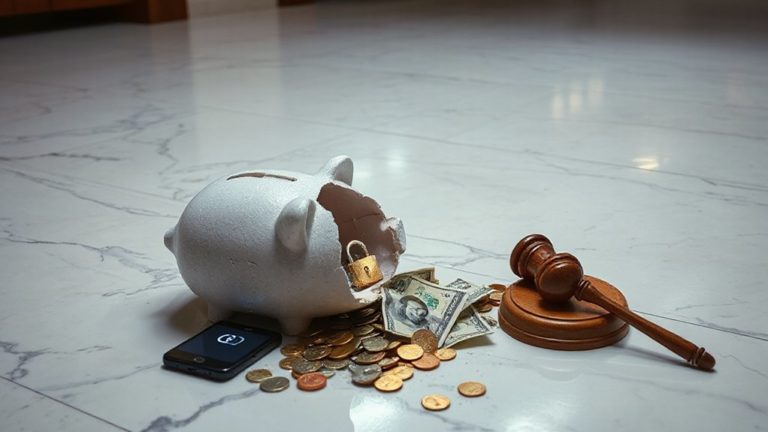
But things turned messy fast. World Liberty Financial allegedly froze his investment and stripped away his voting rights. Cold wallets are often recommended for securing large crypto holdings long-term.
Sun sued over that. Then the company fired back with its own lawsuit claiming Sun ran a coordinated smear campaign against them.
One big investment somehow became two warring legal battles. The WLFI token price has dropped to $0.08, falling sharply from its September high of $0.31.
Sun had also received 1 billion WLFI tokens as compensation for his role advising the project, on top of the 3 billion tokens he purchased directly.
What World Liberty Financial Is Actually Accusing Sun Of?
So what exactly is World Liberty Financial saying Sun did wrong? Quite a lot, actually.
First, they claim he made “straw purchases” — basically buying tokens through other people to hide his identity. Think of it like asking a friend to buy candy for you so the store doesn’t know it’s you. Staking protocols often allow participation via pooling options, which can complicate ownership records.
Second, they say he short sold $WLFI tokens, meaning he bet against his own investment. That broke his agreement.
Third, they accuse him of publicly calling the platform a “scam” and claiming it had “backdoors.” Those posts reached millions of people and caused serious damage.
Fourth, World Liberty claims Sun hired influencers and deployed fake social-media bot accounts to amplify the smear campaign against the brand.
Fifth, Sun’s own legal team allegedly threatened to “light World Liberty on fire” unless the company paid out hundreds of millions of dollars.
The Bot Armies, Influencers, and Alleged Smear Playbook
Beyond just public accusations, World Liberty Financial claims the attack on its reputation was carefully planned and well-funded. According to WLFI, over 500 coordinated accounts posted negative messages at the exact same timestamps — like a very suspicious flash mob.
Blockchain analytics firm Chainalysis later identified clusters of 10,000+ bot accounts spreading fear and doubt across X, Telegram, and Reddit simultaneously. Paid influencers amplified those messages while hiding their payments.
Meanwhile, short-sellers reportedly made over $50 million betting WLFI’s price would drop. WLFI calls this a deliberate “smear playbook,” starting with hacked accounts and ending with calls for government investigations. The attack briefly caused USD1, a dollar-pegged stablecoin backed by short-term U.S. Treasuries, to dip below its $1 peg before recovering. A congressional report has separately alleged that foreign nationals and state-linked entities made substantial investments into World Liberty Financial as part of a broader pay-to-play scheme tied to the Trump family. The coordinated nature of the online campaign mirrors known patterns of mempool clustering and rapid broadcast behavior seen in other crypto-related incidents.
Why World Liberty Froze Sun’s Assets: and What He Allegedly Did First
The bot armies and paid influencers were just one piece of the story. Before World Liberty froze Sun‘s tokens, the project accused him of doing something sneaky first.
In September 2025, Sun moved $9 million worth of WLFI tokens to HTX exchange. World Liberty called this a prohibited transfer and a contract violation. They also accused him of short-selling WLFI tokens to profit from falling prices. So they froze everything — his full holdings — and stripped his voting rights too. Think of it like changing the locks after suspecting someone made an unauthorized copy of the key.
Sun had initially spent approximately $75 million acquiring WLFI tokens in late 2024 and early 2025, making his fallout with the project all the more dramatic given how recently he had been one of its largest backers. His lawsuit also alleges that World Liberty had secretly changed its contractual rules to give itself unilateral blacklisting power over token transfers, without any governance proposal or token-holder vote to authorize the change. AI tools can analyze trading patterns and might have helped detect these alleged short-selling activities.
Sun Already Settled One Fraud Case This Year. That Matters Here
Context matters a lot when a lawsuit gets filed.
Earlier in 2026, Justin Sun quietly settled a separate SEC fraud case for $10 million. The charges involved wash trading — basically faking huge trading activity by shuffling crypto between his own accounts. He also allegedly hid payments to celebrities who promoted his coins. Sun’s companies paid the settlement without admitting wrongdoing. Think of it like paying a parking ticket without saying you parked illegally.
Now World Liberty is suing him too. Back-to-back legal trouble makes Sun’s credibility a central question in this whole messy dispute. The original SEC case, filed under Gary Gensler, was paused in February 2025 before ultimately resolving after Trump returned to the White House. Separately, Sun Communities, Inc. faces its own securities fraud class action, with a $2.3 million settlement already preliminarily approved in April 2026. Bitcoin mining also underpins broader crypto markets by securing transactions through proof-of-work computation.